|
We continue this series on practising with more really practical tips to help you support your child's practice at home. These are better done in a video format, so please watch the videos below. Do let me know how you get on with implementing the strategies at home.
0 Comments
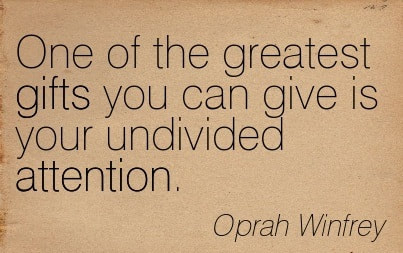
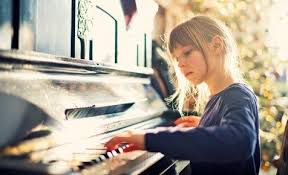
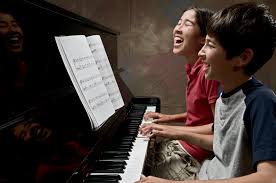
The last couple of posts have discussed the vital role parents play in supporting their child at home by negotiating a practice time and making sure it's stuck to. For the next few posts we turn to practical strategies to help once you're at the piano. Make it a special time In today's hectic world 1:1 time with your child is rare, so why not make practice time a special time when it's just the two of you and you can treasure the time spent together. Put the phone and other distractions away, make sure siblings are occupied elsewhere, shut the dog out and really be present with your child.
your presence is one of the best rewards you can give your child
The power of praise & constructive feedback You already know this, but children crave parents' affirmation but it needs to be:
Say 'I can see how fast you are progressing using that strategy' Say 'I loved the sound you created just there'....and so on. I hope this has given you some ideas for practical ways to support your child. There will be more next time!
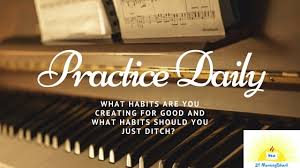
It's the start of the new school year. Children have returned to school and piano lessons eager to learn. There really is no better time to get the piano practice rolling than right now. It's up to parents to establish and uphold the expectation that their child will practice as prescribed by the teacher to help their child develop a practice habit. If you, the parent, are inconsistent then your child will receive the message that actually, music practice is not important nor valued. Develop a practice habit 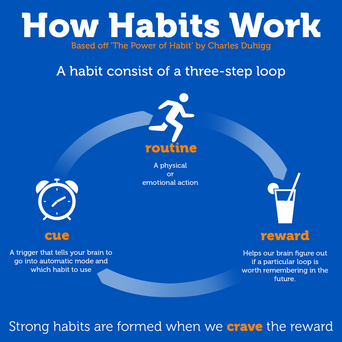 I read a fantastic book earlier this year about how habits work. Habits are developed by our brain to make our life easier. For example brushing our teeth when we get up and when we go to bed. We don't need to think about this, we just do it and I'm sure it's something you're trying to develop in your child, with daily reminders necessary for years. To develop the piano practice habit you need to develop the same routine for your child.
Consistency is key Consistency with piano practice is key. If you are willing to be inconsistent, so too will the child. Every single child who has ever played music will have wanted to skip practice or complained about it, but if you want the end goal - joyful music making - you have to go through some pain. Elissa Milne says 'just as you don't give your child the option of not brushing their teeth, bathing, eating, dressing, in the same way practice is not optional. Even if you have to remind them daily for a decade. You are the parent. You make the rules. No one ever reached adulthood and said I wish my parents had stopped me learning the piano.' Schedule a practice time So, you're at the piano having scheduled the cue - the practice time. Now the real work begins of helping your child through the frustration that will inevitably come, as with any endeavour. Gary McPhearson a music education expert found that parents are the ones that quit. they get fed up with the battles. So what can you do when the going gets tough and the child doesn't want to do it?
You can provide structural support but you cannot make it grow. You want tomatoes but you can't focus on them. You have to focus on the environment. You have to create an environment where the plant can grow and thrive. In the same way you need to create favourable conditions at home, that will enhance and maybe accelerate their love and learning of music. How might you begin to create this environment? Here are some thoughts:
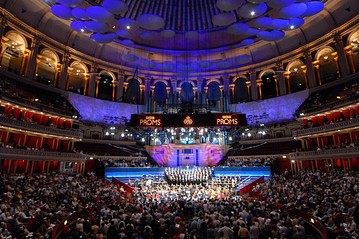 Take them to a children's event somewhere like this, how could anyone fail to be totally inspired by The Royal Albert Hall! You're still going to get tantrums and problems. Christopher Fisher says 'when little people are overwhelmed by big emotions it's our job to share our calm, not join their chaos'. I love this. It's so easy to get caught up in it all rather than just be present with the child's emotions. Remember the key is to be calm and poised so that you can help your child.
when little people are overwhelmed by big emotions it's our job to share our calm, not join their chaos Takeaways A few things to take away from this post:
What strategies have you found that work? Share them below! Read the next post for practical strategies to apply to practice sessions. 
Children can’t see the big picture but adults can. It’s up to parents to get the ball rolling so that the child can build skills and successes and realise that hard work leads to successful and enjoyable music making How do they get to a stage where they can play easily and effortlessly? By practising of course. But you can’t just tell a young child (under 12 but maybe older depending on the child) to go and practice the piano when they get home from their lesson, just like you couldn’t tell them ‘the toilet’s down the hall, off you go’ when you were potty training them. If you want your child to develop a love of music they need your support on a daily basis. If your child sees you not prioritising piano or music, they won’t either and you won’t get the lifelong love of music you’re looking for for your child. Remember progress won’t happen without practice and practice won’t happen unless you make it happen. 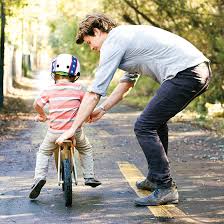 Remember how hard you worked to help him ride his bike? Now it's time for the piano 'training wheels'!
If you do know about music or had piano lessons as a child remember things have changed in the last 20 years and the lessons your child has will most likely look nothing like those you experienced. Ask the teacher questions about why if you like, but you will see for yourself how much better things are these days (with well qualified teachers who keep their skills up to date). Or read about what good quality music lessons look like here.
Many families today are very busy with both parents working and children taking part in many extra curricular activities. But if you want to see progress and joyful music making to ensure they love what they are doing and don’t want to quit then making good quality practice a priority is essential. For young beginners this may look like 5 minutes a couple of times a day. If you’re not going to have time to do this at least 4 times a week then your child is not going to make good progress and is at risk of becoming demotivated because of that. At Surrey Music School we prefer to work with families who are able to commit to this level of practice because it leads to the best possible outcome for the child – a love of music and joyful music making. We can almost guarantee your child will love their music lessons because we only use the most up to date methods, keep our skills well honed through ongoing professional development and are sensitive to each child’s needs. We also help parents support their child at home both through ongoing education via blog posts and responses to individual questions and problems. Next time we will look at how parental views, habits and expectations affect their children’s music making and the following we will look at how Surrey Music School supports parents with practice at home. Don’t worry, you’re not alone – we do everything in our power to help you do the best job you can do.
Last Saturday I attended the first round of the European Piano Teachers' Association (EPTA) piano competition for the Surrey region. I'd invited five of my students to play who have exams looming as I thought it would be good performance practise for them. I wasn't too bothered about the competition element but it proved to be very interesting. Because it was a competition there was an adjudicator. We were fortunate enough to have Masa Tayama, 'one of today’s most accomplished pianists, ... much in demand across Europe and Japan'. As well as his international performing career he has taught at Chethams, is a principal tutor on the EPTA Piano Teachers' Course and is currently a professor at the Elmitt Piano Academy where he gives lecture recitals and masterclasses. At the end of each class Masa gave each student individual feedback which provided excellent suggestions for how to improve future performances. There were so many gems I thought it would be helpful to share them here. Before I do, they can be summed up as finding the meaning behind the music and conveying it. This leads to real music making rather than just technical playing of notation on the page. Curve your fingers! Instead of repeatedly making this point Masa made it at the start of each classes' adjudication. He made the excellent point that other musicians, for example string or wind players have multiple points of contact with their instrument. Pianists have just one: their fingertips. Therefore the fingertips need to be under control. This means each joint round and firm rather than collapsed. It is only with curved fingers that students will be able to make great progress at their instrument. I started a drive for curved fingers this term by handing out play doh for students to press their fingers gently into before playing each day. Watch the video on how to use it here. I have talked about curved fingers with my students for years but was freshly inspired by Masa. My students will now be starting simple technical exercises to strengthen their fingertips and I'm assured by him that this will transfer into their general playing. I have a lot of new beginners this term and not only have they received play doh too, I am very carefully making sure they play with curved fingers from day one. I used to do this and somehow over the years it fell down the list of priorities with young beginners in favour of having fun just playing the piano. It's now back at the top of the list! 'Look like you're having fun' Masa mentioned that many performers looked like they 'had to be there' rather than they wanted to be there. His opinion is if they are going to be there anyway they may as well enjoy it! This was particularly the case for 'silly pieces' where students were encouraged to really let go and have fun with the piece. A case in point was one of my student's pieces entitled 'Waltz of the Toads' which is a waltz written for very inelegant creatures. So he suggested really getting into the character of the piece and playing it inelegantly! I'm looking forward to the next lesson where my student will be given the choice whether she wants to play it like that - I must say it's much more fun this way and sounds great! Whether the piece is silly or not, the point was to look like you want to be there and that you're enjoying yourself! 'Where's the pulse?!' Masa noticed that in several performances he couldn't really locate the pulse. The pulse or beat gives music some of its character and in classical music we want to emphasise beat 1. Of course this isn't always the case and the waltz mentioned above is a case where we abandon this rule and emphasise beats 2 & 3! But generally when playing students need to show the pulse by emphasising beat 1 and putting less stress on the other beats. Dynamics There was much talk of dynamics. Dynamics are the different volumes we can use when making music. He made excellent suggestions about using imagery when thinking about them. If the phrase is forte (loud) is it an angry loud, an excited loud etc. think about what sort of mood the loud is and that will influence how you play it. The same with piano (quiet)- why is it piano here - is it scared, timid, shy, gentle, kind, - think about the mood and try to convey that in your playing. One point he made repeatedly was 'do dynamics because you want to, not because you have to'. If you can find the meaning behind the dynamics then you will want to do them, because you've found the point of them! Dynamics combined with mood, character and pulse give the piece it's meaning - the meaning needs to shine through in every performance and that is where the real music is made. Not in just deciphering the notation, but finding the meaning behind it and conveying that. It's your turn! So, you've done all the hard work. You've learned your piece, you've found the meaning, you know how you're going to convey it. Now it's time to go and play it for other people to enjoy! It's scary going up and playing in front of an audience and it's tempting to rush through the performance and be pleased when it's all over. But Masa pointed out that when you go to the piano it's your turn. It's your turn to be listened to, to have a go, to share the lovely music you've been learning. So relish this time, enjoy it and go for it! Try to forget about the audience and just enjoy your music making, showing the character and mood of the piece. Conclusion A parent whose child played on Saturday said to me at the next lesson that the children will only do what their teacher has told them, which is true. I explained that this was an opportunity for her child to play for someone with so much more experience than their teacher is likely to have. Someone who's not readily available to teach young beginners, someone who has performed and taught at the highest level, who can bring new ideas and fresh insights for students and their teachers alike. Parents - if your child ever gets an opportunity like this then go for it! Make sure they are well prepared and take along some paper and pen to write down the comments to give to the teacher. The feedback will be well appreciated. Not only was this a learning experience for my students in terms of gaining performing experience and receiving feedback, but it was one for me too. A chance to refresh my teaching, be reminded of what's important and listen to new ideas for how to teach what's important. I have come away from Saturday freshly inspired to look for the meaning behind the music and help my students find it and convey it too. I'll leave you with a Chopin Waltz which I performed at a Meetup group the following day which has great meaning to me. At the start of term I handed out a questionnaire (to students who have been with me for a while, new students your turn will come!) from The Curious Piano Teachers' January Curiosity Box which is on the subject of motivation. It had the following questions:
So 70% of children I teach want to play piano for a hobby and 100% want to develop their skills and know they are 'doing it right' without referring to YouTube. The two go together because the more skilled you are the more you will enjoy playing the piano. So what does this mean for my teaching?
I need to remember to stay in the moment and help each student achieve their goal, whether that be learning to play for a hobby or, in the case of one student achieve grade 8. It is notable that only one person had this goal. While 30% mentioned achievements those did not refer specifically to exams. Achievement for others meant completing a piece and feeling the rush of satisfaction / happiness. Practise was mentioned in 60% of answers, and not in a positive way. Children struggle with the amount of time they need to spend playing at home, especially the older ones who have other homework. Unfortunately it is impossible to become proficient at any instrument without practise. I teach the children practise strategies and we make it fun in the lessons with 'cute animals' to help practise. Of course it's different when they are going through the work at home without me to support them. Future blog posts will discuss how children can be encouraged to practise at home.
I can't remember if I did hurry her but I do know I noticed the desire to rush her and later in the lesson I know I slowed down so she could enjoy and be in the moment she was in. As I reflected on my morning's teaching afterwards I realised that children inhabit the present moment naturally. They are so often absorbed in the present moment. How often do we, as adults interrupt that?
Many of us are always hurrying children onto the next activity; then we wonder why, at a later date, they always want to be onto the next thing, why they are never satisfied with what they are doing right now. We often find this at a moment when we have spent a large sum of money on an activity, or arranged something that has cost us much effort. They want the next thing because that's what we've taught them to want! In all our rushing to get things done, teach them as much as possible, cram as much as possible into their lives so they don't miss an opportunity, we are teaching them that what they have now or what they are doing now isn't enough. Many of us are always hurrying children onto the next activity; then we wonder why, at a later date, they always want to be onto the next thing.... because that's what we've taught them! So from today I will make a conscious effort to slow down in my teaching. To allow children to be in the moment; to be absorbed in the activity we are doing now. I will take that extra couple of minutes which will be a special time where I too can notice the moment, be in it with the child and enjoy watching their experience unfold. Their learning and their experience and memories of piano will be all the richer for it.  Here's poem I wrote about a year ago when I first noticed I am always in a rush for the next thing and began to wonder why. I'm grateful for the reminder from this student to just slow down.
Rush Rush Hurry Hurry Always there; never here. Rush Rush Hurry Hurry Something different, something better. Rush Rush, Hurry Hurry This is never good enough. Rush Rush Hurry Hurry Let's slow down and be, just here.
Another creative love is to create music, that is to improvise. Improvising is not playing music that someone else has written, but something I have created myself that has come from nowhere. I can’t share that so easily with others since it’s gone as soon as it arrived. Unlike art I find it harder to get myself to sit at the piano and create music, however when I do it’s such fun and I can get quite carried away, losing all track of time! This is a state of ‘flow’, which ‘is characterized by complete absorption in what one does, and a resulting loss in one's sense of space and time.’ (Wikipedia - see reference below)
we all have something to say, let’s make sure the opportunity to say it is given through the gift of improvisation Leading piano pedagogues have written about the importance of improvising in piano lessons for The Curious Piano Teachers and I have taken a few quotes to share with you. See the full Curious post here.
Conclusion So much of what we hear in the world of piano exams, piano competitions and yes, piano lessons, could be more musical. Could the way thorough this be by encouraging more improvisation in our lessons, to allow students the opportunity to connect to music on their own terms, expressing their own feelings and really developing their understanding of what music means to them. Would this lead to more enjoyable musical experiences for students and their families alike, would students be more motivated to play the piano because it’s ok to just sit down and improvise their own piece?
It is a tragedy if the opportunity to deeply enjoy and connect with music is lost through lessons that require students to simply play what others have written – we all have something to say, let’s make sure the opportunity to say it is given in the gift of improvisation. Visit the improvisation page, play some tracks and experience it for yourself. How do we solve the age old problem of practising between lessons? I'm sure many of you reading this will either have children who learn an instrument or remember your own instrumental lessons and one of the major problems is practice. A while ago I wrote a blog post about the parent's role in the piano learning journey; a major part of which is helping with piano practice at home. Today's post is about a free online tool called Cadenza developed by Professor Rena Uptis of Queens University in Canada that teachers can use to help motivate students to practice at home. Given that students see their teacher for only 30 minutes a week the progress they make is quite remarkable Given that most students see their teacher for only 30 minutes a week the progress they make is quite remarkable. Compared to the hours children spend each day with their teachers at school, instrumental students, their parents and teachers do a job that is nothing short of amazing!
Cadenza is a free online tool that increases the support available for children outside of lessons. It allows:
perhaps most exciting of all, Cadenza allows the student to upload videos of progress during the week on which the teacher can provide feedback Children will need access to a tablet during their piano practice time. They can work through the activities set by the teacher, monitor their progress during the week, see how much time they have spent working on activities and write notes for themselves or their teacher. The tool can help develop the skill of reflection as children can note what went well and what they need to focus on during the next practice session. The creators of Cadenza report that students 'love' using it and that it's fun. Teachers and students report learning more quickly with Cadenza and experiencing more satisfaction as musicians. And why not, the goal is to make music and the sooner we can all do that the happier we will all be!
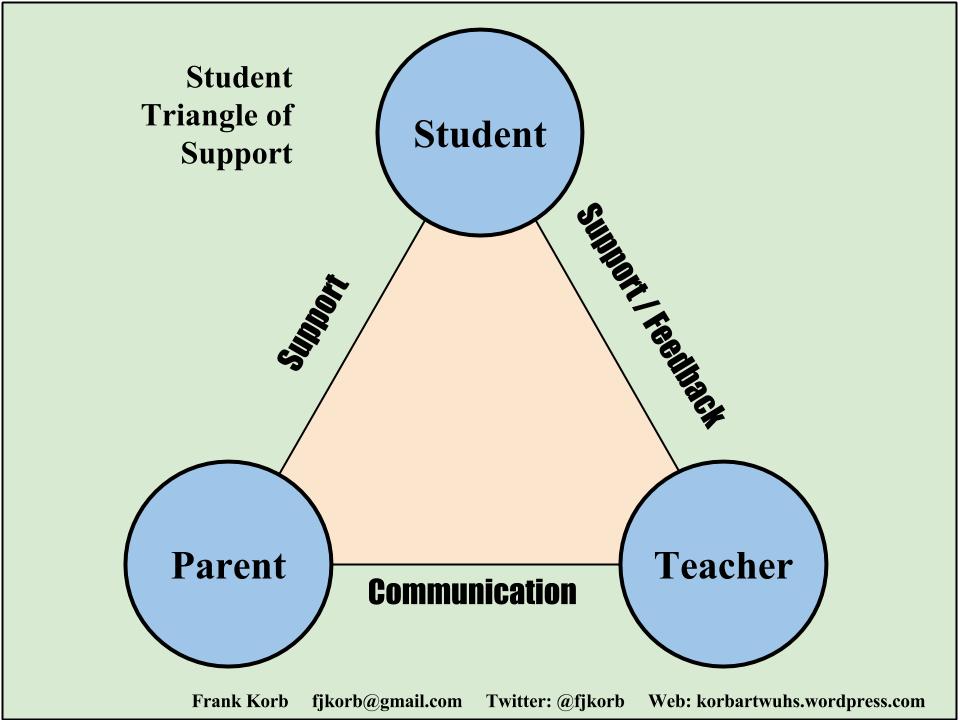
From January 2019 Surrey Music School will be using Cadenza with all students. If you have lessons with us please sign up and let us know when you've done so. We can then connect and the fun can begin! Over the last two weeks I've discussed the parent's and child's role in the journey, today it's the teacher's. The road to learning anything new is never smooth. There are ups and downs, struggles and joys and the teacher is there to accompany the learner through them all, the good times and the bad. Role 1 - Facilitating open communication
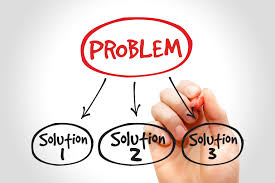
Role 2 - Identifying and solving problems These problems may be emotional and related to the child, or technical / musical related to the piece of music. Children arrive for their lessons in various moods and states of readiness to learn and teachers need to be able to observe and adjust their teaching to suit the child. This can be pretty hard to do as we are under time pressure and want to teach the child as much as we can in the time available, however sometimes it's just necessary to abandon the plan and go with how the child is feeling.
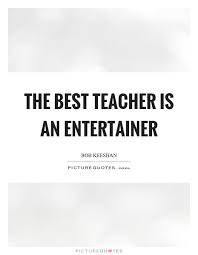
Role 3 - Entertainer
Role 4 - Researcher As teachers we have to be endlessly curious about how we can teach 'better' (helped by ongoing professional development, for example from The Curious Piano Teachers, or membership of Facebook groups for teachers); what resources we can find for our students; which piece will suit which student; how to find a piece a student has requested that is arranged suitably for their level. Role 5 - Educator Not only do we need to educate ourselves and our students (this has been discussed in earlier posts), but we also need to educate parents. Many parents long to play instruments themselves and either didn't as a child, or did and gave up too soon and regret it, or did and became quite successful - whichever it is teachers need to let parents know what music education looks like today. It looks pretty different from what they experienced as a child or think they already know and they may not recognise it as what they want for their child. But it is what their child needs if they are to become fulfilled musicians. Music education has moved on and these days high quality music education teaches the whole child all the skills they need to be successful musicians. So children learn through movement, songs, games, rhymes, they learn to play by ear and from notation, they are encouraged to make up their own music and 'mess around' on the piano. Learning an instrument is not just learning to decipher dots someone else wrote on a page. I'm sure there are many roles that I've missed. Can you help teachers become better by identifying any more? I'll be taking a break from blogging until after Christmas. The purpose of these first posts has been to help educate readers about why music is important, what good quality music education looks like and how they can help their children succeed. In January I'll look at a different topic. |
Caroline BlountDirector of Surrey Music School. Archives
January 2024
Categories
All
|
||||||||||||||||||||||||||||||||||||||||||||||||||||


 RSS Feed